 Auction
 Hard Disk Destruction Service - Why It Really Matters
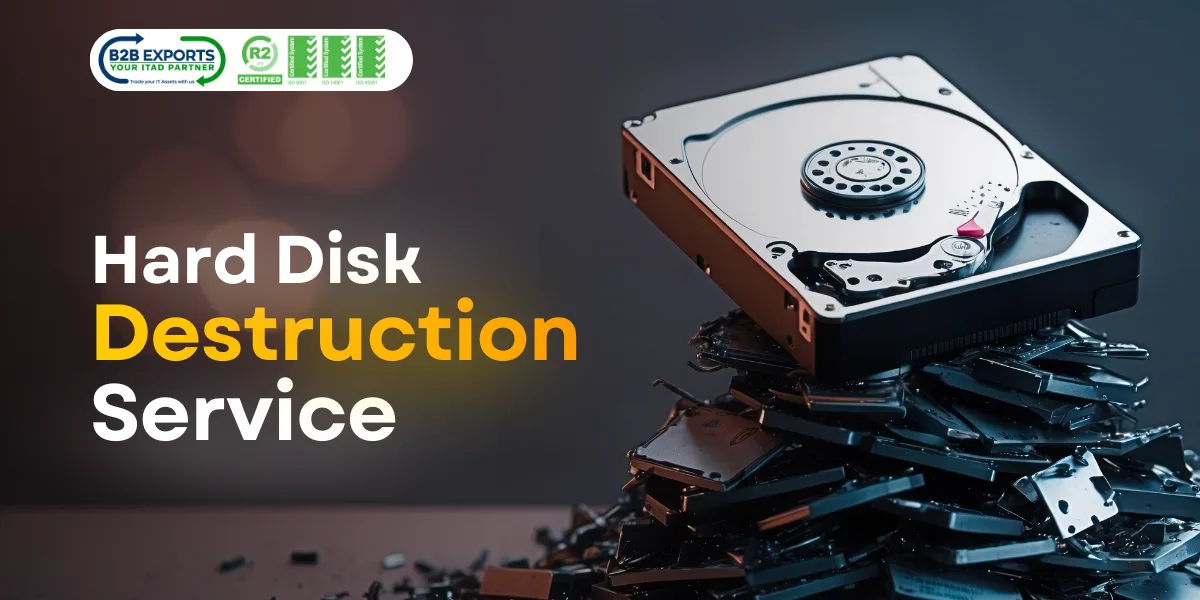
In today's world, where nearly everything is based on data, safeguarding data has become a primary issue for all companies. Businesses invest massively in cyber security measures like firewalls, access control systems and monitoring systems to make sure that data remains secure while it's being utilized. However, one crucial phase of the life cycle of data is often overlooked, i.e. what happens to the data after a hard disk is not in use. This gap in the protection of data can lead to serious security risks.
Old laptops, servers, desktops and storage devices do not simply lose value once they reach the end of their life. They still contain valuable and confidential data such as customer records, financial documents, emails sent internally to employees, as well as login credentials that hold great value. Even after systems have been replaced or upgraded, data often remains on hard drives until it has been properly deleted from them. As a result, hard disk destruction services are no longer optional for modern businesses but have instead become a necessity. This blog will explore what hard disk destruction really means, why simple data deletion alone is insufficient, how professional destruction operates and the importance of secure disposal in terms of data protection, regulatory compliance and long-term trust.
The Hidden Risk Sitting Inside Old Hard Drives
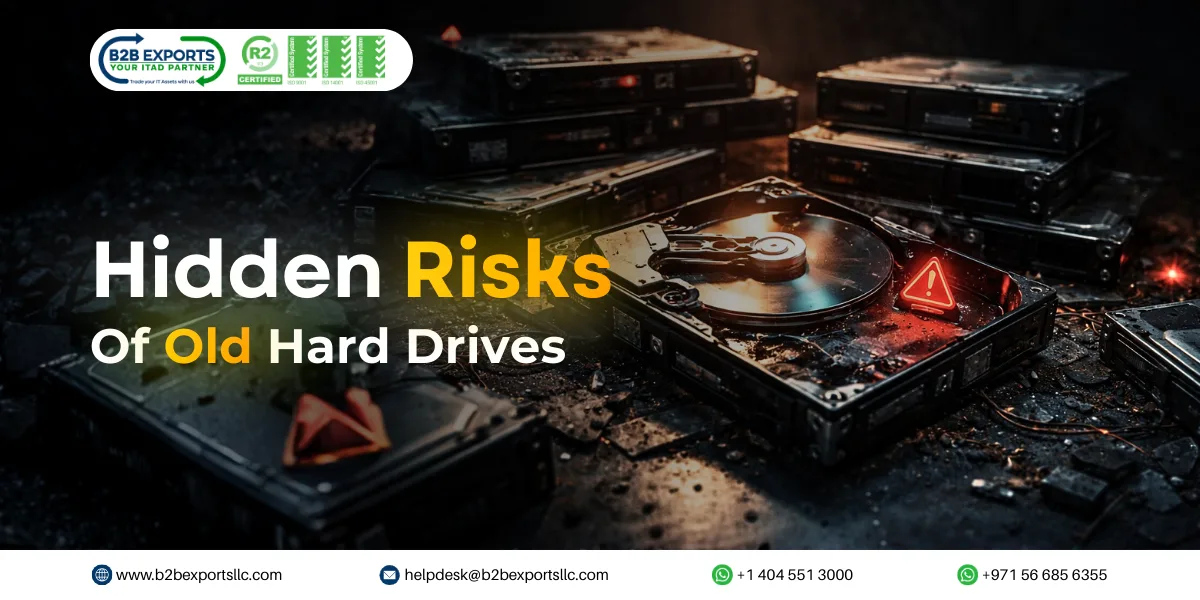
Many organisations believe that deleting files or formatting a hard drive is enough to solve the data security problem. From outside, devices may look clean and ready to be reused, sold, or discarded. But in reality, most of the data still exists inside drives. Deleted information does not disappear instantly. It remains on the drive until it is overwritten and with easily available recovery tools, this “deleted” data can be brought back within minutes. This hidden risk is often overlooked during IT Asset Management (ITAM) and early-stage IT Asset Disposition (ITAD) planning, leaving organisations exposed without realising it.
Imagine, in any old office computers were being sold, donated or thrown away without proper Data Centre Decommissioning. The drives that are still holding data could lead to serious issues like data breaches, legal penalties, financial losses and loosing customer trust. This situation would likely have serious repercussions. For most businesses, the cost of data leakage often far outweighs secure disposal; that is why professional hard disk destruction services play such an essential role - to make sure data is completely destroyed while handling the final stage of the IT asset lifecycle securely and responsibly.
What Is a Hard Disk Destruction Service, in Simple Terms?
A hard disk destruction service is a secure process that makes sure data stored on hard drives is completely removed forever. Instead of formatting or using basic techniques, which often leaves data behind, this process physically damages the hard drive so the data cannot be recovered. Once the drive is destroyed, the data is also destroyed permanently. It cannot be brought back by any software, recovery tool or by any technical expert. This is the reason; why many organisations rely on hard disk destruction services to protect sensitive data. These include businesses, data centres, hospitals, banks, government departments and IT companies. In simple terms, any organisation that stores, processes or handles sensitive and confidential information needs HDD Service.
Why Hard Disk Destruction Is So Important Today?
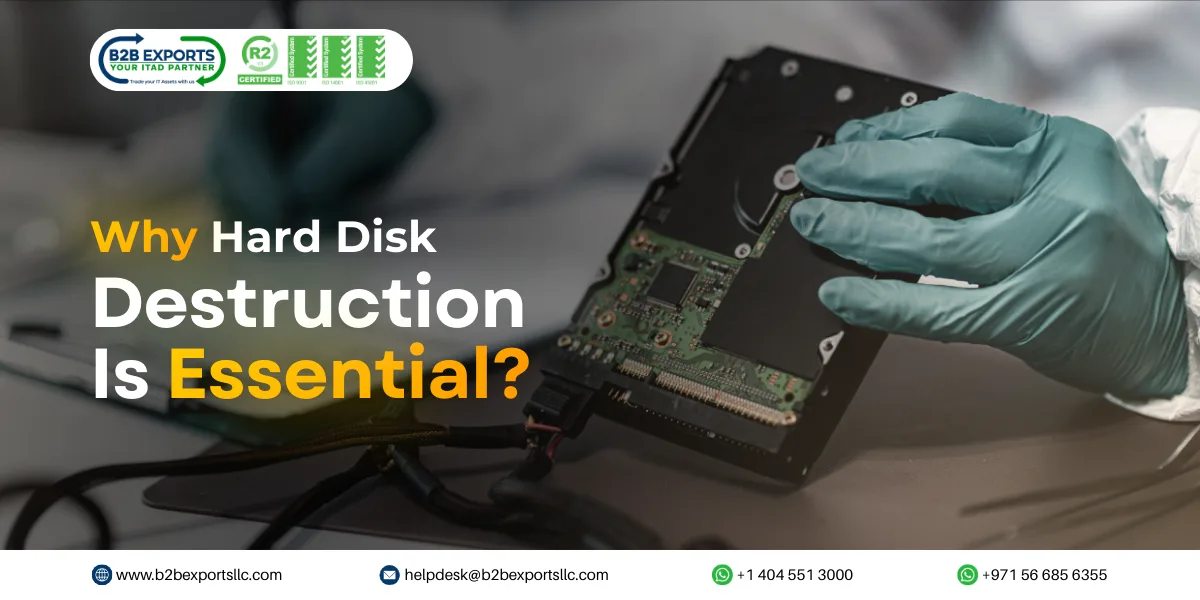
- Data does not go away on its own completely: When you delete a file or format the hard disk, the data is not erased completely. Sensitive information is still retrievable with simple tools and this will pose substantial security threats.
- Data hacks on the rise each year: Cybercrime and misuse of data are rampant. Unprotected and old hard drives are low-hanging fruit and the most vulnerable aspect of data security.
- Companies hold more sensitive data than ever: Customer information, financial records, emails and login IDs continue on hard disks, also very long after the systems are withdrawn from service unless they were securely destroyed.
- When you're a gentrifier, the regulatory and tax rules are stiffer: Privacy laws dictate that organizations securely dispose of data. If hard drive disposal is not completed correctly, there are fines, audits and legal trouble.
- Trust in a brand is difficult to rebuild once lost: Just one data leak from bad data disposal practices can have a long-term damaging effect on customer trust and brand image.
- Legacy IT assets are often redeployed or decommissioned: Laptops, servers and storage are frequently sold, donated or recycled. Without hard drive shredding, confidential computer data can be stolen.
- Crippling the hard drive removes any doubt: Physical damage guarantees that the data is gone forever. It leaves no possibility of reclaiming, misusing or there being any risk in the future.
- Safe and Secure IT asset lifecycle disposal: Hard Drive Destruction is the secure destruction of hard disks, which is the foundation of a secure IT asset management, decommissioning, or data security strategy.
How Professional Hard Disk Destruction Actually Works?
Professional hard disk destruction services follow a step-by-step process designed to securely destroy data. Their goal is simple: to safeguard the information while avoiding mistakes and ensuring complete transparency throughout. From the moment a hard drive is identified until its destruction, every process is carefully recorded and documented to ensure that organizations remain safe, compliant and assured in the knowledge that hard drives will be securely destroyed.
The process usually includes the following steps:
- Asset identification and tracking: Each hard drive is first identified and recorded using serial numbers or asset tags. This ensures that every device is accounted for and prevents from loss or mix-ups during the destruction process.
- Secure handling: Hard drives are handled carefully at all times. If destruction takes place off-site, the drives are transported in sealed containers using controlled logistics. If destruction happens on-site, mobile destruction equipment is brought directly to the customer’s location.
- Physical destruction: This is the most important step. In this step, hard drives are physically destroyed using approved methods that make data recovery impossible. Once this step is completed, the data is permanently destroyed.
- Certification and reporting: After destruction, certificates of destruction and destruction reports are provided to organizations. These records are evidence that the data was securely destroyed and can assist in satisfying audit and compliance obligations.
Methods Used for Hard Disk Destruction
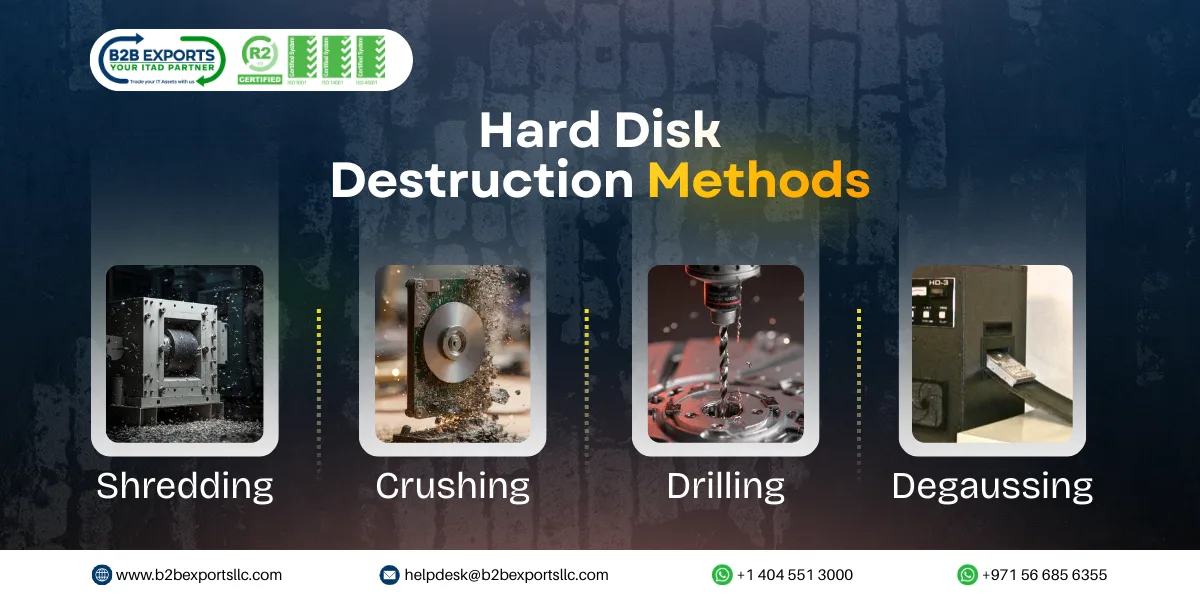
Organizations use different approaches to hard drive destruction depending on their level of data security and privacy requirements. Each method plays an essential part in safe data disposal. Experts or professionals select that option which is the most effective option depending on data sensitivity and legal requirements. Although different approaches might differ in their implementation but their objective is the same, which is to permanently erase all forms of data from the drive, so that it becomes impossible to recover it again. Certified service providers adhere to strict guidelines when choosing methods of destruction to guarantee all data has been securely and completely deleted from a hard drive.
Some of the most commonly used hard disk destruction methods include:
Shredding: It is one of the most popular and reliable method. Hard drives are fed into a machine called an industrial shredder, to be broken into smaller bits. It destroys all internal microchips and circuitry, eliminating any possibility of retrieving information.
Crushing: Crushing uses strong pressure to damage the hard drive and its internal platters. It is often used alongside shredding when higher levels of security are required.
Drilling: Drilling creates holes through the hard drive to damage the storage area. While it helps destroy data, it is usually combined with other methods for better assurance.
Degaussing: Degaussing provides a strong magnetic field to clean up the data stored on magnetic drives. This will permanently damage the drive and make it useless, rendering the data unreadable once again.
Hard Disk Destruction vs Data Wiping
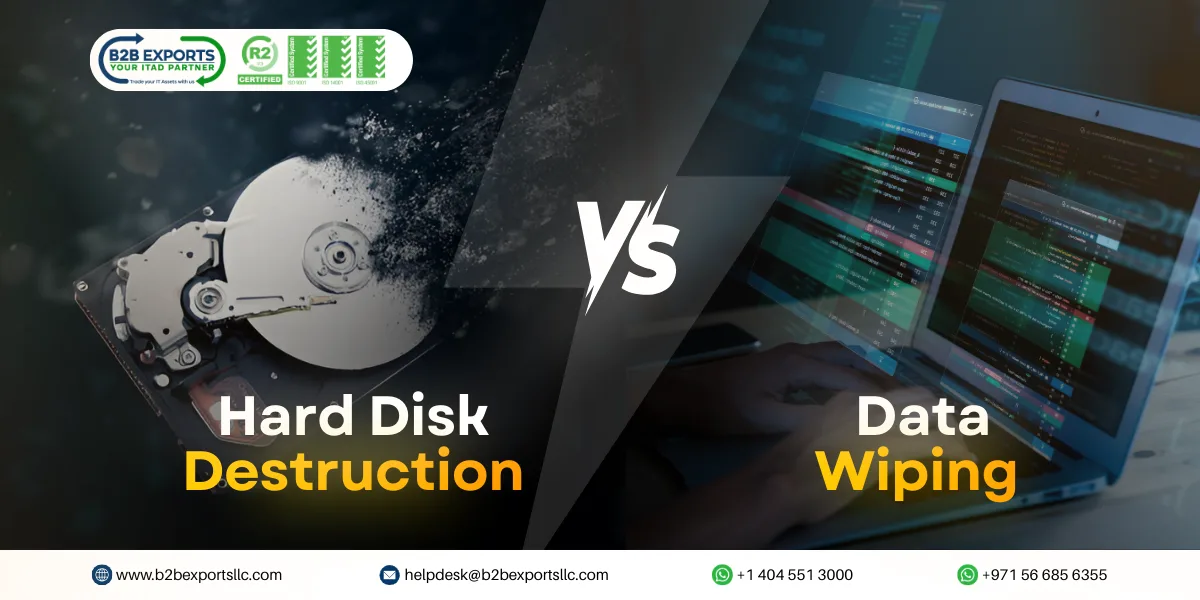
Data wiping uses specialised software to overwrite the data stored on a hard drive. This method is commonly used when devices are still in good condition and will be reused or resold as part of regular IT asset management. Once data has been overwritten with new files, it becomes virtually impossible to recover. But since the hard drive remains undamaged, its security depends heavily on how effectively the wiping process was carried out; incomplete or noncompliant processes may leave behind remnants of data that still contain valuable details.
Hard disk destruction takes a more permanent approach by physically damaging the hard drive so that the data inside can never be recovered. This method is best suited for old, damaged, retired or end-of-life devices where reuse is not required. It is also the preferred option when data sensitivity is high or when organisations must meet strict compliance requirements. By destroying the drive completely, destruction removes all uncertainty and delivers the highest level of data security with zero recovery risk.
So in conclusion, the decision to choose between data wiping and hard disk destruction really comes down to how secure process your organisation needs. With data wiping, you can use the drive again, search and view data at a later time and with destruction you cannot recover but neither will anyone else. Data wiping is most effective when devices are still in working order and will be used again or resold. It mitigates risk, but eliminates it only partially. Since an intrusive hammer-shredder physically destroys the drive, this leaves no possibility of a subsequent data recovery. Put simply, data wiping is about reusing whereas hard disk destruction is about certainty.
Who Needs Hard Disk Destruction the Most?
Nowadays almost every business can benefit from secure data destruction, but some industries just not need it, it’s their necessity. Hospitals or any healthcare providers deal with private records of their patients. Banks and financial companies handle personal details and payment information. IT companies and data centres store large amounts of client data. Government organisations also work with sensitive and confidential records every day. In these fields, even a small data leak can cause serious legal trouble, financial loss and damage to reputation. That’s why hard disk destruction is a need as well as a responsibility. It helps keep people safe, protects sensitive data and maintains trust.
Environmental Responsibility and E-Waste Management
Modern hard drive destruction services do more than just keep information safe, it can also help to protect the environment. Once a hard drive is completely destroyed, its materials like metal and plastic are separated before recycling properly to reduce e-waste that would eventually end up in landfills and contribute to pollution. By employing secure data disposal with responsible recycling practices alongside secure data disposal procedures, organizations can keep sensitive data secure while also helping the planet. In this way, data security and environmental responsibility can work together.
Choosing the Right Hard Disk Destruction Service Provider
It is important to choose the right hard disk destruction provider. Not all offer the same security level. A reliable provider will follow industry standards and maintain strict security controls. They should also provide full tracking from collection to destruction of each hard drive. It is important to have clear documentation including certificates of destruction, audit-ready reports and other forms of documentation. These elements can help organisations to stay compliant and reduce risks, while maintaining confidence in the data handling.
B2B exports are experts in this area. They follow responsible and secure practices throughout the lifecycle of IT assets with R2v3 Certified processes. They focus on accountability, transparency and compliance at all stages. Good service providers do not just destroy hard drives. They help organisations protect themselves from future data risk while supporting secure and compliant data disposal.
Conclusion
The destruction of hard disks may appear to be a minor task when viewed in the context of IT operations. However, its impact is greater than what most organizations realize. A single mistake in handling old hard drives can result in serious consequences. They often contain years' worth of sensitive information. Data breaches, litigation, financial losses and reputational damage can quickly undo years' worth of hard work. It is for this reason that secure data disposal shouldn't be viewed as a secondary or routine activity.
Organizations that take the necessary steps to dispose of hard drives in a secure manner take full control over their data security. By treating hard disk destruction as an essential step rather than as an afterthought decision, organisations can gain greater oversight into their data protection measures and meet legal compliance obligations more easily while creating long term trust with customers and business partners. Today's information-rich world requires organisations to take this responsibility seriously and secure hard disk destruction is no different than any other responsibility in life.
Frequently Asked Questions (FAQs)
Question 1: Is deleting files or formatting a hard drive enough?
Answer: No. Simply deleting files or formatting a hard drive does not completely remove the data. With special recovery tools, the information can still be recovered or brought back.
Question 2: What kind of data is at risk on old hard drives?
Answer: Old hard drives often contain customer information, financial records, emails, company documents, passwords and many other sensitive business data.
Question 3: What is the difference between data wiping and hard disk destruction?
Answer: Data wiping uses software to erase the data so the hard drive can be reused. Hard disk destruction physically breaks the drive, making sure the data can never be recovered.
Question 4: What is on-site hard disk destruction?
Answer: On-site destruction means the hard drives are destroyed at your own location using mobile equipment. You can watch the process as it happens.
Question 5: What is off-site hard disk destruction?
Answer: Off-site destruction means the hard drives are safely taken to a certified facility, where they are destroyed in a secure and controlled environment.
Question 6: How do I choose the right hard disk destruction service provider?
Answer: Look for a reliable and trusted provider who have proper certifications, strong security procedures, provide complete tracking and clear proof such as a certificate of destruction.