 Auction
 IT Asset Remarketing as a Secure Value Recovery Strategy
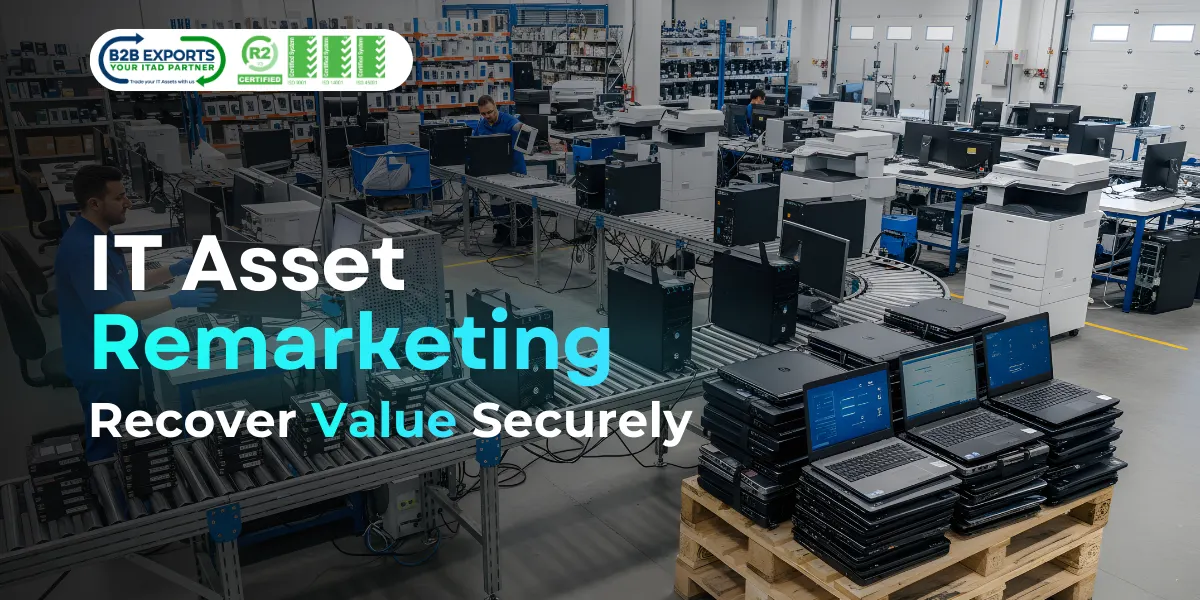
Technology is never static. Companies regularly upgrade their IT Assets along with other technology in order to keep up with the ever-growing performance, security, operational and compliance requirements. Although these upgrades are crucial but they also leave companies with an abundance of unused or surplus IT assets. Often, these equipment are put in storage, lost in time or even disposed off without planning. These are the places where risk begins to surface, particularly when older equipment is not handled with security in mind. This structured approach to handling retired equipment falls under IT Asset Disposition, which ensures data security, compliance, value recovery and responsible reuse of IT assets.
Old IT equipment is more than just hardware that no longer fits your business needs. It often still holds real value and in many cases, may also contain sensitive data. IT asset remarketing helps organisations manage both of these challenges at the same time. It allows businesses to recover value from retired assets while making sure data is handled in a secure and responsible way. When done correctly, IT asset remarketing turns what could be a risk into a smart and sustainable business decision.
What Is IT Asset Remarketing?
The truth about IT asset remarketing is that this seems like such a simple thing. After all, it’s just that what happens to IT Assets after it’s no longer required. These can be laptops, desktops, servers, storage devices, computer monitors and networking equipment. Instead of disposing of them or leaving them lying idle and unused for too long, without planning their next steps. Some devices can be used internally again, others can be sold and others recycled in a responsible way. What makes IT asset remarketing different from normal disposal is the order of priorities. The first concern is always data security. Value recovery comes later. No asset moves forward unless the data stored on it is properly handled. This simple rule makes remarketing safe, controlled, and useful for modern businesses.
Why IT Asset Remarketing Matters More Than Ever?
Today, businesses depend on data for almost everything. Customer details, financial records, emails, and internal files live on IT systems for years. Even when devices stop being used, this data often stays behind. At the same time, organisations are under pressure to reduce costs and avoid waste. IT asset remarketing helps on both fronts. It allows businesses to recover money from equipment they no longer need, while also reducing the risk of data exposure. There is also a growing expectation for companies to act responsibly and reduce electronic waste. By extending the life of IT assets, remarketing supports these expectations in a very practical way.
The Hidden Risk of Ignoring Old IT Assets
Old IT Assets may look harmless, especially when they are switched off and stored away. But those devices often contain some amount of data. Deleting files, resetting or formatting a system does not fully remove data. In many cases, that data has been recovered. Problems usually start when old assets are sold, donated or discarded without proper checking or analysis. If data is exposed somehow, the impact can be serious. Legal trouble, financial loss and damage to trust are very common outcomes. IT asset remarketing helps prevent these situations by ensuring that data is properly handled and secured before any IT asset is sold, donated, or removed from organisational control.
Data Security: The Foundation of IT Asset Remarketing
The core of IT asset remarketing is security of sensitive data and without it, nothing works. Before a device is retired, resold or recycled at any stage in its life cycle, its stored data inside them must be securely and thoroughly wiped. This classifies as certified data erasure, sometimes referred to as secure wiping. For devices that are inoperable, damaged or contain classified information, the storage media can be physically destroyed through Secure Data Destruction. Both secure data wiping and physical destruction fall under secure Data Disposal, depending on the condition of the device and the sensitivity of the data. Only then does the asset move to the next stage. By putting data security first, organisations remove uncertainty, reduce risk and ensure IT asset remarketing stays safe and trustworthy.
How the IT Asset Remarketing Process Works
IT asset remarketing processes are designed to be straightforward and simple for organisations to navigate. They allow organisations to move old IT equipment safely forward without confusion or risk; from initial check through final outcome each step follows a clear order to protect data while recovering value in an ethical fashion.
The procedure usually involves these steps:
- Review and identification of assets: Each device is identified and assessed to assess their condition, age and value. This helps determine if the device can be reused or sold.
- Risk assessment of data: While doing this, the data that is stored within the system is scrutinised. This aids in determining the most appropriate way to remove data according to the sensitivity of the data and security requirements.
- Secure data removal: All data is deleted by using approved methods. This procedure is performed with care and documented in order to make sure that nothing remains.
- Security of the data: After data removal is completed after which checks are made to verify it is secure to proceed with the process.
- Recycling or reselling: Once data security is verified after which assets go to their next phase. Certain assets are recycled internally; others are sold and the rest are sent to responsible recycling.
- Tracking and reporting: Through the entire process, monitoring and reports keep organisations aware and assured that every stage has been properly handled.
IT Asset Remarketing or Just Simple Disposal
Simple disposal refers to getting rid of outdated IT equipment as quickly as you can, without worrying about what might happen next. Equipment is often removed without considering its condition, life span or the information it may still have. This rash approach could lead to unnoticed risks, such as leaks of data, insufficient records, and a loss of opportunities to retrieve the value. The idea of treating assets as rubbish means that organisations lose control, and often valuable equipment is destroyed without reason.
IT asset remarketing follows a more structured and responsible path than mere disposal, treating each IT asset as something still worthy of consideration and with potential value. Assets are assessed, data is securely removed from them, and decisions about reuse, resale or recycling are made accordingly - giving organisations full control and transparency as to where their assets go, as well as knowing exactly who receives them and where their data goes. Eventually, this approach reduces risks, supports compliance obligations, recovers financial value while meeting sustainability goals - this long-term advantage makes many prefer IT asset remarketing over simple disposal.
Financial Benefits of IT Asset Remarketing
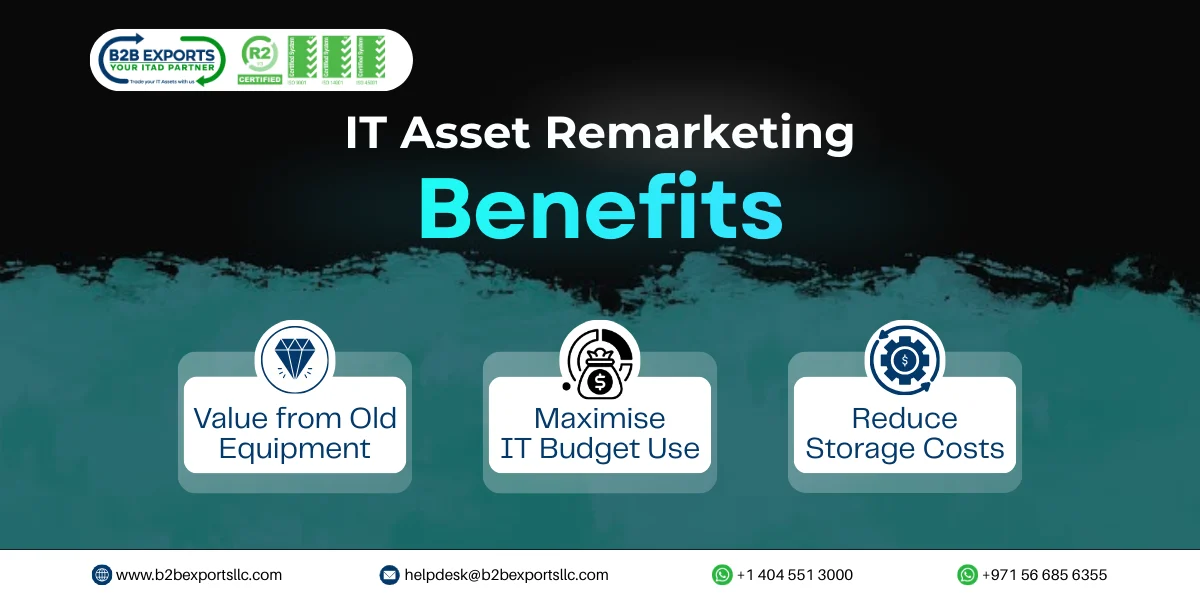
- Get value from old equipment: One of the main benefits of IT asset remarketing is turning unused equipment into cash. Even older devices can be sold if checked, repaired, and marketed properly. The money earned can be reinvested into the business and help cover the cost of new IT equipment, lowering overall spending.
- Maximise the Use of Your IT Budgets: Remarketing can be a way for businesses to attain more value from their IT investments. Instead of treating them as a total loss, companies can remarket the equipment and get some money back to help better plan for upgrades, budget more accurately and have sustainable IT spend practices.
- Lowering storage and handling costs: When IT assets are not needed, storing them takes up space and they need to be accounted for, which in turn can introduce risks. Companies can sell or remarket these assets to clear space, reduce administration and the costs involved in long-term storage.
Compliance and Risk Management
Regulatory requirements make it clear that organisations are responsible for protecting data throughout the entire IT asset lifecycle, including the final stage when equipment is no longer in use. This is often where risk is highest, as forgotten or poorly managed assets can still contain sensitive information. IT asset remarketing assists in compliance by making sure that each device undergoes an approved and documented process that is controlled and documented. Verification, data wipes that are secure tests and methods for handling that are approved aid organisations in complying with the requirements of law and industry and reduce the risk of misuse or exposure to data.
Equally crucial is the ability to show that the proper actions were taken. Documents that are thorough, such as data wiping reports as well as certificates of destruction offer the evidence that data has been taken care of in a responsible manner. These documents make audits easier and less stressful because companies can easily prove compliance when needed. As time passes, this organised method reduces the risk of long-term loss as well as protects the reputation of brands and provides companies with confidence that their obligations to protect data have been met in full.
Sustainability and the Circular Economy
Sustainability is simple with IT asset remarketing. Instead of throwing away old IT Assets, companies look to reuse or sell it first. Many devices have a long life left, therefore prolonging their use saves the environment and energy. When reuse is no longer possible, the assets get recycled via responsible measures and valuable materials are recovered, while waste is prevented from leaving the environment, thus preventing e-waste. This supports a circular economy, where products go back to being used instead of being discarded. This allows companies to reach their environmental targets conveniently and without making daily business tasks more difficult.
Common Challenges in IT Asset Remarketing
Security risks for data: The most significant problem is making sure that all sensitive information is removed from the devices prior to resale and reuse. Any error in data wiping could lead to data breach, compliance issues and loss of trust.
Accurate Assessment of Assets: The process of determining the real value of reselling used IT assets isn't always straightforward. Factors such as device age, condition, market demand and changes in technology can alter the price, which makes it challenging to maximise the value of your investment.
The absence of proper documentation: The absence of or insufficient documents, like information on asset tracking and certifications of destruction of data, could cause compliance issues and audit risk for companies that manage large amounts of assets.
Logistical and handling issues: Secure transport, collection as well as storage for IT assets requires strict controls. Unprofessional handling in these areas could result in damages, losses or security holes which reduce the value of assets.
Compliance with Environmental and Regulatory: Many companies struggle to meet environmental and sustainability goals. They have to see that the unrecyclable articles are recycled in an environmentally friendly way, otherwise they run risks of causing environmental disaster and will be faced with legal problems.
The Future of IT Asset Remarketing
As more businesses are getting digital, IT asset remarketing is becoming a key part of managing technology. Devices are upgraded more often and the data stored on them keeps growing every year. That’s why it’s important to have a clear and consistent way to handle these assets when they’re no longer needed or retired. Organisations that start focusing on IT asset remarketing will gain a big advantage. They can stay in control of their assets, protect sensitive data and recover value as well. All without taking any unnecessary risks. Today, IT asset remarketing isn’t optional; it’s essential for running IT operations responsibly, securely and efficiently.
Conclusion
Old IT equipment must not be disregarded or ignored. Even though devices are no longer needed, they still store valuable information and hold real value. IT asset remarketing provides businesses with a safe and straightforward method for dealing with such assets; by first securely wiping their hard drives before making decisions about reuse, sale or recycling, they remain in control and avoid any unwelcome surprises or risks that might occur; this helps avoid data leaks, comply with compliance standards and ensure no one handles anything without proper checks.
Remarketing IT assets is also a smart business practice. Instead of losing money through premature storage or destruction of equipment, companies can recoup value to use in supporting future IT upgrades while at the same time helping reduce electronic waste while meeting sustainability goals. When conducted responsibly and efficiently, asset remarketing protects data, saves costs, and has minimal environmental impact; that is why its inclusion has become such a necessary component of responsible and efficient IT management today.
Frequently Asked Questions (FAQs)
Ques 1: Why is data security important in IT asset remarketing?
Answer: Old IT devices often store sensitive business and customer data. Without proper data removal, this information can be recovered and misused. Secure Data Sanitization ensures organisations stay compliant, reduce risks, and protect their reputation.
Ques 2: What types of IT assets can be remarketed?
Answer: Most business technology equipment can be remarketed, including laptops, desktops, servers, storage devices, networking equipment, and monitors. The remarketing option depends on the asset’s condition, age, and performance capability.
Ques 3: Is IT asset remarketing environmentally friendly?
Answer: Yes, IT asset remarketing supports sustainability by extending the lifecycle of devices through reuse and resale. When equipment cannot be reused, responsible recycling helps reduce electronic waste and supports circular economy practices.
Ques 4: How do organisations ensure compliance during IT asset remarketing?
Answer: Compliance is maintained through certified data destruction methods, secure handling procedures, and detailed documentation such as audit reports and certificates of destruction. These records prove that assets were managed safely and legally.
Ques 5: What happens to IT assets that cannot be reused or resold?
Answer: Devices that are outdated, damaged, or non-functional are sent for environmentally responsible recycling. Valuable materials are recovered, and harmful waste is prevented from entering landfills.
Ques 6: When should a company consider IT asset remarketing?
Answer: Businesses should consider remarketing whenever they upgrade, replace, or retire IT equipment. Planning remarketing early helps maximise asset value, reduce storage risks, and ensure secure data handling.