 Auction
 Role of IT Asset Remarketing in Promoting Sustainability
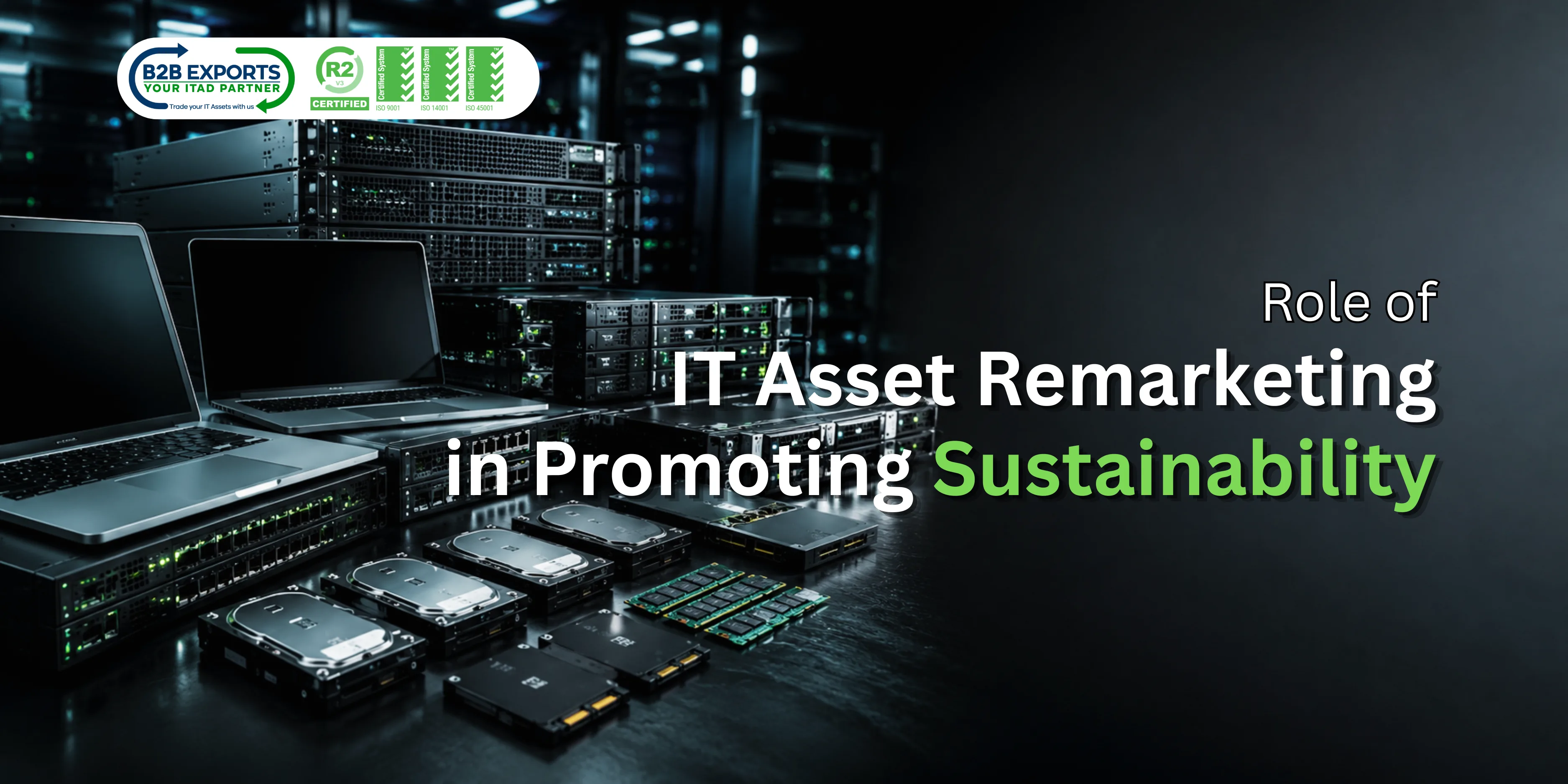
In today’s time, sustainability has become a key business priority due to increasing rules and customer demand. What was once considered a minor issue has now drawn the attention of all enterprises. Organizations with huge IT infrastructures are not only responsible for energy consumption, but for every aspect related to their technology operations. They may face a sustainability challenge as IT assets go through various stages from acquisition to retirement. The present time demands attention to the environmental footprint. The need for sustainability increases as operations, resource consumption, and waste have a direct impact on the environment. IT Asset Remarketing helps organizations create a balance between technology upgrades and sustainability. This approach is helpful in expanding the lifecycles of products by transforming the electronic waste into valuable resources.
Due to digital transformation, businesses face an increased need to use and replace their IT assets. As a result, the data centers constantly upgrade their servers to achieve better performance. Companies support remote work by replacing devices and updating their networks to meet high data needs. With evolving technology, operational equipment may fail to satisfy the requirements of its original owners but can still hold utility and value. In such situations, IT asset remarketing plays a role in restoring any remaining value. Thus, organizations can contribute to environmental benefits by achieving corporate sustainability goals.
Effective technology consumption requires a strategic approach that extends beyond simply using and discarding equipment. Resource constraints and environmental pressures are rising rapidly, especially in the technology sector. IT assets are required to maintain their usefulness across multiple owners rather than being wasted early. Organizations need IT asset remarketing to work on the principles of the circular economy. This process will not only help in restoring value for sellers but also allow buyers to access affordable technology.
IT Asset Remarketing Process and Its Environmental Impact
Identifying IT Assets for Remarketing
The IT asset remarketing process consists of a range of activities that prepare used technology for resale and reuse in secondary markets. This process starts when those assets are identified that no longer meet the operational requirements of an organization. Assets may become obsolete due to upgrades, consolidation or changing business needs. Remarketing passes the equipment through a process that focuses on reuse rather than immediate disposal or recycling of the materials.
Checking the Condition and Resale Potential
Asset inventory and evaluation are the initial steps of this process. This step includes checking the condition, features and market demand of retired equipment. Specialized IT asset disposition services are required to determine whether assets are suitable for being remarketed. Such evaluations determine whether the assets should be used for remarketing or should be sent for secure recycling. IT assets that pass through the first evaluation are then ready for the preparation stage. They are prepared by securely wiping the data and refurbishing. Before moving forward, the devices are tested for functionality and checked for quality. The aim is to ensure that remarketed assets not only meet the performance standards but also ensure reliability for future owners.
Cleaning Data and Getting Devices Ready for Reuse
The IT asset remarketing process takes into consideration significant aspects of sustainability through environmental benefits. It straight away creates an impact by extending the life of IT equipment. Their extended use helps in delaying the need to extract new resources. As a result, there will be fewer emissions and energy consumption in producing new units. Huge quantities of resources, including metals, plastic and energy, are used in manufacturing new laptops, servers and related devices. These impacts can be avoided by remarketing capable assets rather than replacing them with new production. Studies examining the environmental footprint of electronic devices often show that the majority of resources are consumed during the manufacturing stage.
How Remarketing Helps the Environment
Apart from avoiding new production, sustainable IT asset remarketing also helps in lowering E-waste. It needs to be either recycled or sent to landfills, where dangerous substances can settle into soil and water. Although electronic waste can contain valuable materials, it can also carry lead, mercury and other harmful substances. When working equipment is kept in use for longer periods, remarketing can delay or even remove the need to handle components using recycling systems. These systems still consume energy and produce pollution, even though they restore useful parts.
Saving Resources by Extending Technology Lifecycles
For environmental sustainability, IT asset remarketing relies on the idea of conserving resources by extending the life of technology. There is a delay in the new manufacturing of equipment every year as the working technology continues to be used. It means all processes, from material extraction and processing to their assembly and distribution, are postponed. An extension in the technology life of hundreds and thousands of devices has a major combined impact. Compared to situations where equipment reaches the end of its journey too early, remarketing can reduce the consumption of resources, use of energy and harmful carbon emissions.
Many materials from around the world are used in making a typical company laptop. Modern computers contain various resources from aluminium used in the laptop’s body and lithium in its battery to special metals for screens and electronics. They also include different kinds of plastics made from oil. Complex supply chains are required throughout the continents to get all of these materials. Energy is necessary not only for manufacturing but also at each step of mining, refining and transportation. For instance, a laptop that could only be used for four years can be remarketed and work for six years or even more. Along with the extended life of technology, all the energy and resources that are used to make the IT assets are spread out over more years.
Remarketing of servers and other data center equipment creates many opportunities for conserving resources. Large quantities of special materials, including processors, power supplies and drives for storage, are used in the construction of enterprise servers. The systems are built using flexible designs, which makes them suitable for upgrading, replacing or even repairing individual components as per the requirements. Thus, manufacturing of these systems is done in such a way that they are highly durable with longer operational life. However, constant technology changes and high-performance requirements may cause the equipment to retire that still has a lot of useful life left. IT asset remarketing solves this problem by using these assets for longer. The equipment is moved to those places where less performance is needed, but reliability still matters.
The remarketed IT assets are reused in less demanding roles as they continue to age. It helps organizations to get all possible value throughout their life. An equipment that performs well may be initially used for heavy database-related work and later be sold where basic processing is required. Before the equipment is finally retired, it is used for testing or development environments. Together, every stage ensures that IT assets remain useful for more years. Along with a lesser need to build new systems, there will also be e-waste reduction.
ITAD Sustainability Practices and Company Environmental Objectives
Supporting Company Sustainability Goals
In every industry around the world, companies are more aware of the environmental impact for ethical, compliance and business-related reasons. Major businesses are now focusing on carbon neutrality, reducing waste to landfills as part of their sustainability goals. It is a fact that technology infrastructure requires a huge investment and impacts the operations. Therefore, managing the IT assets becomes an important part of sustainability plans. With sustainable IT asset remarketing, organizations can achieve measurable results from their broad environmental goals. Thus, results can be easily monitored and verified using sustainability standards.
Measuring Environmental Impact
Nowadays, stakeholders are more concerned about the sustainability performance and demands for clarity. It leads to a strong connection between IT asset remarketing and sustainability reporting. Along with regulators, other stakeholders such as investors, customers and employees demand clear proof of every environmental claim made by a company. Efforts for ITAD sustainability that focus on remarketing help in ESG reporting. It creates useful data about the quantity of equipment not sent to landfills, avoiding carbon emissions by extending the life of assets and the amount of value restored by reselling.
Following Certified Recycling Standards
Certifications and compliance requirements are a must for top ITAD sustainability practices. It helps organizations to verify their environmental claims. For the refurbishment and recycling of electronics, there are strict rules in the standards established for responsible recycling (R2). These rules help in the proper handling of devices, eco-friendly management and data protection.
Financial Benefits of Remarketing
In addition to the environmental concerns, there are many financial aspects of IT asset remarketing. Constant technology upgrades result in high costs for companies. However, remarketed equipment helps in creating revenue and improving the cost-effectiveness of IT investments. Organizations with diverse technology get the most financial advantages. Their servers, networking devices and other equipment have high demand in secondary markets. Thus, sustainability should not be treated as a cost burden rather it is a revenue-generating activity. This way, connecting financial and environmental benefits leads to more support from company leaders for circular economy practices.
Data Security and Compliance in the Remarketing Process
Businesses store a lot of valuable information in their IT assets, which can be anything from customer data and financial documents to regulated information. The organizations that focus on sustainable IT asset remarketing must meet the required rules for compliance and privacy. Thus, there must be a balance between environmental goals and data security needs. The risk of data exposure increases if devices are not cleaned properly before they are resold or reused in secondary markets.
Professional IT asset remarketing processes help in dealing with such risks of recovering sensitive information. These processes ensure security by following the necessary methods of data destruction, maintaining the usability of devices for resale. Most commonly, software is used to permanently remove all the data from the devices. It is done by writing random information over the storage areas as per the established standards. The methods of data destruction are also checked by external parties to ensure that the required protocols were followed.
Certain devices store very sensitive and valuable information and they are meant to follow strict regulations. Complete removal of security risks requires physical destruction of storage drives. However, equipment whose drives are destroyed will have reduced resale value and may even require new storage. Thus, this method is not suitable for the objectives of remarketing. Along with risks of data privacy, organizations also need to measure the financial and environmental benefits of extending the life of assets.
The need for safe disposal practices by organizations is increasing rapidly under the data security regulations. In the present time, many rules for data protection make it necessary to protect confidential information throughout the life and disposition of an asset. Organizations must provide documentation to show that security was ensured before remarketing any device. Those companies that work with certified ITAD professionals can responsibly manage their assets. With these services, companies can better meet the regulations and support sustainability.
Business Value of Sustainable IT Asset Remarketing
Financial advantages and environmental benefits are expanding IT asset remarketing as a sustainability practice. Secondary markets for reselling used technology infrastructure have now become well-established. These markets work on efficient buying and selling, having clear pricing structures, channels of distribution and quality benchmarks. This way, organizations can restore significant value from older devices. In simpler terms, an otherwise old laptop could still be sold at a meaningful price and servers can have even higher resale potential. Thus, recovering value from technology equipment has financial benefits that can balance the cost of investing in new devices.
Operating globally, the markets for remarketing meet the supply and demand that cover many different regions. IT assets that are retired by organizations belonging to developed nations are in high demand in places where the use of technology is growing fast. The demand is good because there are many areas where the budget is limited, but the need for technology is high. Schools, small businesses, individual users and others can access these resources due to the cross-border movements. The global presence not only helps in filling the digital gap but also allows the organizations to recover better value from their used equipment.
Many factors will guide the future of IT asset remarketing in the upcoming years. Tasks such as pricing and demand forecasting can be improved using artificial intelligence and machine learning. Changes in policies may encourage the principles of the circular economy. It enables organizations to responsibly repair and reuse their electronics. Organizations must adjust their manufacturing practices as they set climate goals and focus on reducing emissions. Sustainable asset disposition becomes an essential aspect of managing technology as the link between remarketing and climate goals increases.