 Auction
 Recover Value From Retired IT Assets Without Compromising Security
Every year, enterprises around the world retire large volumes of laptops, servers, storage drives and desktop systems. A large number of these devices are relatively new, only a few years into use and still hold considerable market value. Yet, instead of being utilized effectively, a significant portion ends up sitting idle in storage, written off prematurely or disposed of through channels that offer minimal financial return as well as limited accountability.
The challenge is not the absence of solutions, but the lack of a well-defined and structured approach to IT asset retirement. When security concerns arise, many IT and compliance teams take a cautious route, opting to destroy assets entirely. Hard drives are often destroyed, devices are taken apart and in the process, any remaining value is simply lost. However, this approach is mainly focused on reducing risk. While other strategic considerations should also be given more importance.
Protecting security and recovering value go hand-in-hand, they’re not opposing goals. With the right processes in place, organizations can recover meaningful financial return from retired IT assets while maintaining strict compliance with data protection requirements. At the same time, they can ensure that sensitive information is fully protected and does not leave the organization in any recoverable form. Achieving this balance is essential for effective and responsible IT asset remarketing.
The Overlooked Cost of Idle IT Assets
Most organizations gradually build up a backlog of retired IT equipment. A mid-sized enterprise that refreshes its systems every three to four years can easily end up with hundreds of unused devices at any given time. For data centers or cloud operators, that number can quickly grow into thousands.
-
Declining Value of Idle Equipment
Every device is a depreciating asset. The longer it remains unused, the more its resale value declines. A server that could have been sold at a reasonable price within a year of retirement may lose a large portion of its value over time and after a few years, it may hold little to no market worth. Unlike financial investments, IT hardware does not retain value passively, it gradually loses worth over time, so delaying action can end up being an expensive decision.
-
Security and Compliance Risks in Storage
Storing retired equipment also poses compliance and security challenges. Without proper inventory control and security tracking processes in place, they are susceptible to loss, theft or unauthorized access. Such situations have led to multiple data breaches. For organizations that are governed by GDPR, HIPAA or similar frameworks, this risk becomes significant and is closely monitored by auditors and regulators.
-
Role of Structured IT Asset Management
A structured approach through IT asset management (ITAM) helps in addressing these challenges. When organisations maintain a clear and documented process for tracking assets from procurement to retirement and final disposition, they reduce uncertainty and minimise risk. ITAM is not just about maintaining inventory records; it plays an important role in keeping things organised and accountable, while forming the base for managing IT assets smoothly throughout their entire lifecycle.
Making Data Security the First Step in IT Asset Remarketing
Before any organization can think about recovering value from retired IT assets, ensuring complete data security must come first.
-
Why Data Security Concerns Hold Organizations Back
The primary reason many organizations hesitate to remarket retired IT assets is the risk of data breaches. Enterprise devices tend to contain highly sensitive data, such as employee records, financial information, customer details, the list goes on. You can delete files or reformat a drive, and that may make the data seem inaccessible, but it will not erase the data entirely. Often, devices that haven’t been fully sanitized can still yield information with the right recovery tools.
-
Certified Data Destruction is Essential
Certified data destruction is not optional in the IT asset remarketing process; it is the essential first step. Before any device is considered for resale or reuse, all data must be permanently and verifiably erased. The approach varies based on the device’s condition. Systems that are suitable for refurbishment typically go through software based data erasure using recognized standards. If a device is not suitable for refurbishment, it is securely disposed of using processes like shredding.
-
Importance of Documentation and Audit Trails
The key difference between certified data destruction and basic wiping is the proper documentation that comes with it. A certified process generates a clear audit trail, including a certificate for each device that records the method used, the date of destruction as well as the compliance standard followed. This documentation serves as proof that proper procedures were maintained and becomes essential during audits or legal reviews.
-
Compliance Requirements and Governance Value
In the healthcare, insurance, banking and legal sectors, this extent of documentation is often a regulatory requirement. Even for organizations outside these sectors, maintaining a certified audit trail reflects strong governance practices. It helps in keeping the organization secure, protects customer information and keeps the IT systems reliable and trustworthy.
Turning Retired Hardware Into Recoverable Revenue
Once data has been securely removed and the process is fully documented, devices can safely move into the remarketing phase. IT asset remarketing is a well-defined approach that includes assessing, categorizing, refurbishing and reselling retired equipment through established secondary channels. When handled efficiently, it allows organizations to recover real financial value that helps in balancing the cost of future technology investments while lowering overall spending on hardware.
Evaluating and Grading Devices for resale
The process begins with a thorough examination of every device. That means checking its physical state, whether it still performs well, how old it is in relation to current market demand and whether its specifications still match what customers are looking for. Devices are assigned grades that reflect their condition and resale potential based on this general assessment. Those that pass the standards are refurbished, while others are properly recycled or disposed of safely.
Restoring Value Through Certified Refurbishment
IT asset refurbishment is where much of the recoverable value is regained. This often includes cleaning, replacing defective components, reloading the operating system and testing to make sure it works. And a professionally refurbished device is not inferior; it is ready to offer a trustworthy experience for its next user. Enterprise-grade refurbished equipment such as servers, workstations and business laptops continue to be in demand across educational institutions, growing businesses, the cloud services sector and emerging markets.
Financial Impact of Well-Planned Remarketing
The financial return from IT asset remarketing can vary depending on the type of device, how old it is and the condition it’s in. But one thing remains clear, equipment that is properly refurbished and sold through the right channels almost always brings in more value than simply discarding it. For organizations dealing with large volumes of retired IT assets, these returns can add up in a meaningful way, often helping to cover a significant part of future technology investments.
Designing a Robust and Compliant IT Asset Disposition Framework
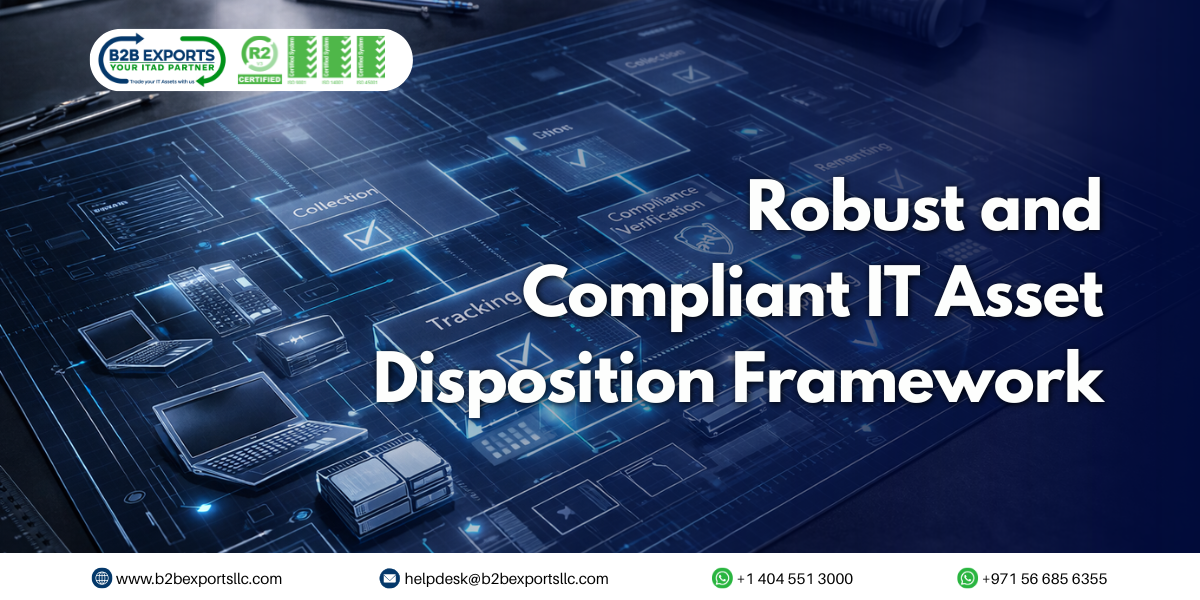
A well-structured IT asset disposition (ITAD) framework starts with clear direction, thoughtful planning and the right partnerships to ensure every step is handled securely, consistently and responsible.
Defining the Scope and Establishing Clear Policies
A compliant IT Asset Disposition program incorporates forming clearly defined policies and begins long before assets reach the retirement phase. Organizations that successfully manage IT assets have documented references in place, giving an outline of how assets are classified, tracked and handled throughout their lifecycle. These policies cover critical issues such as how assets are identified and logged at the time of procurement, who is authorized to retire equipment, what destruction methods are permitted for different classes of asset and which ones can be used for remarketing or recycling.
Without this structure, ITAD often becomes inconsistent, handled differently across teams and situations. Such inconsistency creates compliance gaps as well as increases security risks. A well-designed ITAD program treats the retirement of assets as a formal process, with defined steps, assigned responsibilities and complete documentation throughout.
Choosing the Right ITAD Partner
It is not cost-effective for many organizations to manage the full ITAD lifecycle in-house. In many circumstances, collaborating with a certified ITAD provider is the better solution because this allows thorough data destruction, refurbishment, remarketing as well as reporting. Accreditation is a significant achievement, as it indicates that the provider has been audited and complies with recognized environmental and security standards, such as with R2v3 certification and ISO standards.
Transparency is just as important. A trustworthy ITAD provider also gives you clear and detailed reports for each and every asset processed, including what was collected, how data destruction was carried out, what went to recycling and the value recovered. That kind of visibility makes it simpler for organizations to facilitate audits, satisfy compliance obligations and monitor sustainability objectives, all as a one-and-done process in a thoroughly documented way.
Building Long-Term Value Through Strategic IT Asset Lifecycle Management
The organizations that are able to recover the most value from their IT assets are not those that only act at the end of the lifecycle. They make it part of their plan from the beginning. This kind of shift in mindset, from just a reactive disposal to actually planning the lifecycle management is what separates businesses with strong asset management practices from those that consistently miss out on potential value.
-
Timing Asset Retirement for Maximum Value
Strategic lifecycle management means understanding how each asset loses value over time, recognizing when it holds the highest potential for resale and making the retirement decisions at the right point. A server that is retired while it still has strong demand in the market will naturally generate better returns than one retired much later, when its value has already declined. For organizations managing hardware in large quantities, even small improvements in timing can result in meaningful financial gains.
-
Including IT Asset Remarketing in Financial Planning
Bringing IT asset remarketing services into the financial planning process instead of handling it as a last-minute step is essential. When procurement teams understand that retiring assets through a structured remarketing program helps in generating revenue that can be recovered, they can consider that into the total cost of ownership calculations for hardware investment decisions. As a result, budgeting becomes more accurate and creates a cycle where better asset management leads to better financial outcomes.
-
Promoting Sustainability Through IT Lifecycle
By extending the life of IT assets with refurbishment, e-waste can be reduced and the need for new manufacturing can be minimized. For organizations with larger ESG goals, a carefully managed remarketing program is one key way to demonstrate real and measurable progress, something that’s becoming increasingly important to customers, investors and regulators alike.
Conclusion: Maximizing Value Without Compromising Security
Many organizations still operate under the assumption that they must choose between protecting sensitive data and recovering value from retired IT assets. In practice, this is not the case, as it is a misconception that can cost businesses significantly over time. With the right structure, the right processes, both aims can be accomplished without sacrificing either.
Each step in the lifecycle supports the next when they are managed correctly. Certified data destruction is the absolute guarantee that your sensitive and critical information has been safely removed. Refurbishment means how devices are prepared for reliable reuse, restoring them to a standard suitable for the next user. IT asset remarketing services then connect those devices with buyers who can continue to use them effectively. All of this is supported by a well-managed IT asset lifecycle that keeps the process organized, traceable and consistent.
Organizations that follow this structured approach to IT asset disposition achieve more than reducing security risks. They also reduce overall technology costs, enhance compliance readiness and allow better utilization of existing resources rather than prematurely discarding them. The end result is not only a trade-off between security and value, it is an outcome that is smarter and more balanced to pursue both business goals as well as sustainability. Therefore, retiring IT assets can be both secure and rewarding. Instead of choosing one over the other, businesses can protect data while still getting back value from the equipment.