 Auction
 Why Secure Data Centre Decommissioning Services Matter?
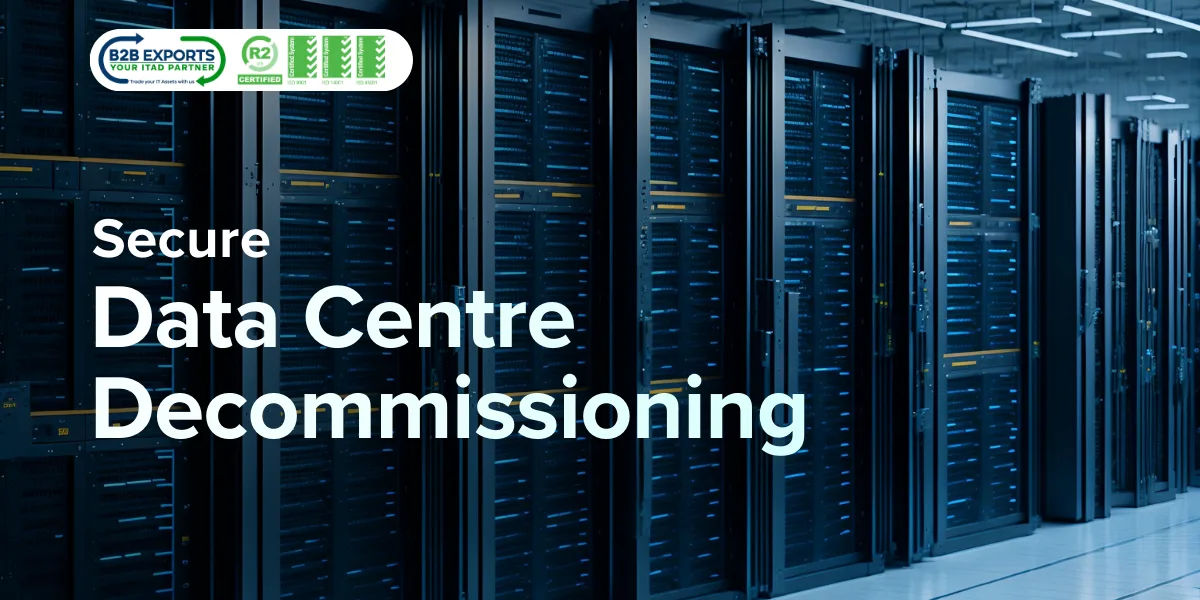
Data centres help modern businesses run. These centres host software. They keep important information. They are used to support everyday activities. For the most part, they operate in the background. Businesses spend a lot more to protect their systems. Every risk is monitored. When it comes to closing or relocating one's Data Centre to another location, the scenario is different. This process usually receives less focus. Many companies underestimate the importance of this phase. Once workloads have been transferred, then the next tasks could seem simple. Shut down servers, remove equipment, dismantle racks, shut down the website. It looks like a cleaning-up process, but it's not.
Data Centre Decommissioning is the most crucial part of the IT lifecycle. Decommissioning a data centre is more than just turning the machines off. It poses challenges to security, audit compliance, financial recovery, asset tracking and stewardship. Storage devices could still hold some sensitive data. Assets could be shifted or they could be sold. The companies can be exposed to serious challenges and risks, including data breaches, non-compliance and unexpected losses if they don’t have a systemic process.
This is the reason why Secure Data Centre Decommissioning Services are essential. They provide control, security and proper structure to the shutdown process. A well-planned approach safeguards sensitive information, minimizes the risk of regulatory oversight, puts assets in the public eye and encourages the responsible disposal of assets and value recuperation. Understanding their significance is vital for any business making a secure and smooth transition to a data centre.
Understanding Data Centre Decommissioning
Data Centre Decommissioning means closing a data centre safely. It is not just about turning off servers. It also includes removing equipment, tracking assets and protecting data. The goal is to shut down the facility without creating problems. Decommissioning is mainly about control. Every item must be checked and managed. This includes servers, storage devices and network equipment. Many devices may still hold sensitive data. Some assets may still have value. Without a proper strategy, businesses can face several issues and financial loss. Secure Data Centre Decommissioning Services help reduce these risks by adding structure and security to the process.
Why Decommissioning Is a Critical Phase of the IT Lifecycle
Organisations spend a lot on managing their IT infrastructure. They focus on buying new systems. They plan deployments carefully. They optimise performance. They maintain security and stability. These stages receive strong attention, budgets and oversight. But the retirement phase is different. It is often ignored or underestimated, which creates a serious gap in the IT lifecycle. Security controls may also weaken. Governance processes may slow down. Assets start leaving controlled environments. Risks begin to increase.
Closing a data centre adds more challenges. Systems may no longer be monitored closely. Equipments are disconnected. Devices are moved or stored somewhere. Older hardware may resurface. Compliance rules still apply. Storage devices may still contain sensitive data. Each of these factors increases risk. As told before, decommissioning is not a simple shutdown task. It is a high-risk transition. It requires strong planning, control and proper processes. This Services help organisations manage this phase safely. They protect data, maintain compliance and prevent security gaps.
Residual Data: The Hidden Threat Inside Retired Infrastructure
- Residual data exposure is one of the most underestimated risks during decommissioning. Many think that by deleting files or formatting drives, they are permanently erasing information. However, in practice this does not always result in unrecoverable data. The data are often still present until they get overwritten and even formatting just deletes the file’s reference rather than deleting the actual content.
- Storage devices across multiple asset categories may still contain sensitive information, including customer records, financial documents, intellectual property, internal communications, system credentials and confidential operational data. Even failed or unused drives can hold recoverable fragments.
- The risks are high if this equipment is resold, recycled, donated or disposed of incorrectly without evidence of a certified sanitizing or Secure IT Data Destruction When retired infrastructure results in data breaches, companies are exposed to monetary fines, regulatory scrutiny, litigation and negative brand consequences lasting far beyond the attack. The irony is striking. The defenses you once put in place to protect your data are now resulting in exposure.
- Secure Data Centre Decommissioning Services address this risk through certified Data Sanitization and physical destruction methodologies. These processes ensure that sensitive information cannot be recovered, eliminating one of the most significant vulnerabilities associated with facility closures.
Compliance Obligations Do Not End With Shutdown
Compliance responsibilities don’t suddenly just go away only because a data centre is decommissioned. Shutting down systems doesn't get rid of regulatory obligations. Privacy and security rules with respect to data still stand. It is up to enterprises to ensure that sensitive information is treated properly. This will also involve a secure shredding or certification of erasure of all data bearing devices. Closing the facility is never sufficient in and of itself.
In a lot of cases, decommissioning presents more risks for compliance. Equipment is removed. Storage devices are moved. Assets may be refurbished, sold for reuse or resell value. Regulations must be strictly complied with at every step. A wrong move can result in audits, penalties, legal trouble and damage to a reputation. Proper documentation is therefore critical. The Random scan report, Certificates of Destruction, asset tracking records, etc. are evidence that everything was done securely and properly after all!
Asset Visibility and Governance Control
Data centres are asset-rich environments. These are the result of years of upgrades and expansions. The environment can comprise servers, storage systems, switches, racks and power supplies. Each one is a big-ticket purchase. If appropriate discovery and inventory checks aren’t in place, organisations can lose track of what’s really on-site. Further, visibility of assets becomes increasingly critical during decommissioning. They must know who and what is where, at all times. From extraction to disposal, devices must be managed in a secure manner. Chain-of-custody protocols build in safeguards along the way. In situations when there is insufficient control of the assets, then organisations have problems with lost equipment, financial discrepancies, security breaches and audit failures. That is where data centre decommissioning services come in. By maintaining governance integrity, all assets are accounted for and processed according to policies, ensuring governance is adhered to.
Operational Risk During Data Centre Closure
- Unexpected downtime: Systems shut down in the wrong order can interrupt business operations.
- Application failures: Dependencies between platforms may break during transition.
- Data access disruption: Critical information may become temporarily unavailable.
- Configuration mistakes: Rapid changes increase the chance of technical errors.
- Business continuity impact: Poor coordination can affect services and productivity.
Closing a data centre is a sensitive operational phase. Numerous systems, teams and workflows come into play simultaneously. Even minor mistakes can lead to downtime, service outages and operational instability without a disciplined methodology. Effective planning and disciplined execution not only minimize these risks but also ensure business as usual.
Secure IT Data Destruction: A Non-Negotiable Requirement
Data security is a key aspect of every decommissioning project. Just because the power is off doesn't mean your sensitive data isn't at risk. Some data may remain on servers, storage devices, backup systems and hard drives. Everything which is destroyed through Secure IT Data Desposition, ensures that this information can never be compromised after the assets leave the organisation. Failure to completely wipe sensitive data may lead to disclosure or retrieval of the data. The secure destruction can be accomplished by certified wiping, degaussing or physical destruction. It depends on the sensitivity of data and requirements to comply. Hard Disk Destruction is the ultimate guarantee when there’s a very high security requirement. Once a drive is shredded or crushed there is no retrieving the data.
The Financial Impact of Improper Decommissioning
Retired infrastructure often retains residual value. Servers, networking hardware and storage systems may still have demand in secondary markets. Without structured IT Asset Disposition planning, organisations may discard equipment capable of generating financial returns. Value Recovery Options include reuse, resale, refurbishment or component harvesting. ITAD programs make certain that assets are assessed for value recovery opportunities while security and compliance controls are upheld. Value recovery transforms decommissioning from a pure cost centre into a financially optimised transition.
Logistics and Secure Handling
It is not as easy as picking up equipment to decommission a data center. Proper planning and control are needed in this process. Equipment is to be de-installed securely packed and transported safely. Without proper handling, companies face deterioration, loss of assets or breaches in security. All such steps need to safeguard the device and the data it may contain. Good practices in security logistics contribute to mitigating this risk. Material is packaged into sealed containers and transported by tracked vehicles. Takeover records as well as lockage systems provide accountability from end to end. These controls are intended to preserve the integrity of assets and restrict unauthorized access as the devices travel.
Environmental Responsibility and E-Waste Management
Data Centre closures generate a huge volume of E-Waste. Proper planning and control are needed in this process. Equipment is to be de-installed securely packed and transported safely. Without a complete E-Waste Recycling Process, companies can face deterioration, loss of assets, or breaches in security. All such steps need to safeguard the device and the data it may store. Good practices in security logistics contribute to mitigating this risk. Material is packaged into sealed containers and transported by tracked vehicles. Takeover records as well as lockage systems provide accountability from end to end. These controls are intended to preserve the integrity of assets and restrict unauthorized access as the devices travel.
Why Professional Decommissioning Providers Matter
Decommissioning of a data centre is a complicated process. There are technical challenges, security controls and compliance needs to be addressed, logistics to be planned and financial decisions to be made. Balancing all these might also be difficult. When you have teams in house, not all your internal groups are going to have special tools for disposal, secure logistics systems or control frameworks as detailed, which can stand in the way of a smooth and secure transition. The pros: Professional decommissioning services provide expertise and an organized process for the effort. They use certified procedures and secure handling methods. They also provide accurate reporting and tracking of assets. Their participation decreases the risk, creates higher efficiency and ensures accountability in all levels of the decommissioning life cycle.
Common Mistakes Organisations Must Avoid
The decommissioning process at data centres can also easily become dangerous if ordered procedures are ignored. The majority of organizations only shut down systems and turn in assets without security, compliance and asset control. If you make errors in judgment during this stage, you can face consequences like data breaches, lost revenue and regulatory fines. A properly structured and managed effort prevents these problems and the related chaos.
- Lack of a proper asset inventory taken prior to removal
- Use of plain deletion as a form of secure data wiping
- Neglecting to use conformity and auditing documentation
- Employing non-certified vendors for data destruction or recycling
- Failing to capitalize on IT asset value recovery
Conclusion
Securing Data Center Decommissioning Services are necessary because they protect enterprises at the weakest point of their IT Lifecycle. Decommissioning is not just something that happens to shut things down. It’s a big step that includes sensitive information and valuable assets, but also operational stability, compliance obligations and environmental responsibility. This phase of maturity can hold back organizations and even lead them to data breaches and fines by infringing upon rules, asset loss, or loss of finances that are not required, as there is no organized governance in place.
An organized and safe methodology turns decommissioning into a mitigated cost-driven process. Sensitive data is eliminated by Secure IT Data Destruction and Hard Disk Destruction methods. The remaining risks are mitigated by certifying the sanitation of the data. Use of asset visibility is safeguarded by tight tracking and IT Asset Management alignment. Audit trails and documentation assist compliance requirements. Better Financial Results - The financial benefits of IT Asset Disposition (ITAD) and also remarketing are realized. The eco obligations are taken care of by the responsible E-Waste Management.
In a world in which trust is key to the digital economy, compliance and finance, along with technical efficacy, the process of infrastructure decommissioning is as critical as how that infrastructure was employed. For those investing in site closure confidence, it is about more than just decommissioning facilities. They protect reputation, trust in compliance, recover value of their assets, mitigate risk and provide stability & vision.